








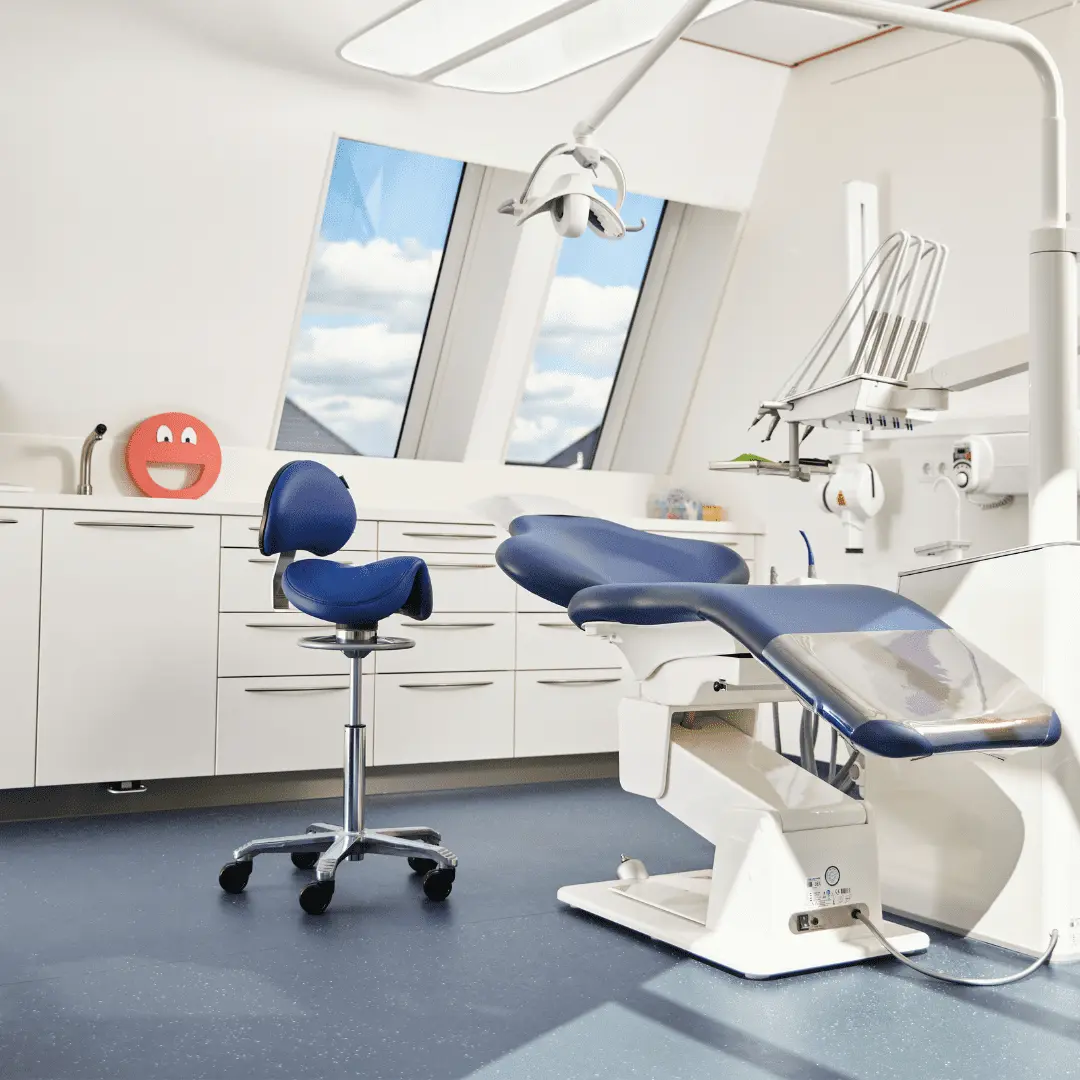
The dental saddle stool is gaining attention for one simple reason. Too many UK dental professionals experience pain while working. In dentistry, that is not a minor inconvenience but a threat to comfort, efficiency, and a long career.
The MSK Burden in Dentistry
Musculoskeletal problems are widespread among dental professionals. Research has found that about seven in ten dental care providers experience musculoskeletal issues, with the neck, shoulders, and lower back most affected.
The consequences are serious. A UK retrospective study revealed that musculoskeletal disorders were the most frequent cause of premature retirement at 29,5%, while another review of ill-health retirement found MSK problems accounted for as much as 90% of cases.
Why Flat Stools Don’t Work
Conventional flat stools often force a seated posture that collapses the pelvis backwards, flattens the lumbar curve and increases load through the spine. They can also encourage hip flexor tightness and prolonged static muscle work, which is exactly what dentists and hygienists don’t need during long procedures.
That is why a poorly fitting dental operator stool can turn a full clinic day into an endurance test for the neck, back and shoulders.
How The Saddle Shape Helps
A well-designed ergonomic dental stool changes the scenario by opening the hip angle and tipping the pelvis forward. That supports the spine’s natural curves, reduces spinal compression, and also makes it easier to stay close to the patient without hunching.
In many cases, a dental saddle seat also improves their movement around the surgery because the legs can do more of the work.
Choosing the Right Stool
Not every dental saddle stool is built the same way. Solid seats suit users who want a familiar feel, split seats can reduce pressure in sensitive areas, and cutaway designs may help with closer access, depending on anatomy and working style.
Key buying points include:
– Backrest or no backrest.
– Height range and cylinder size.
– Weight capacity and base stability.
– Upholstery and hygiene qualities.
The Score Saddle Stool and Bambach Saddle Seat Compared
The Score saddle stool is designed for practitioners who need support during prolonged static work, with swing armrests, an adjustable backrest, and multiple height options.
The Bambach saddle seat is often preferred by those who want a more specialised saddle shape and a distinct upright working posture. In practice, the choice between Score vs Bambach comes down to whether you want more support features or a dental saddle stool with a more traditional feel.
The Importance of Proper Fitting
A dental saddle stool only works well if it’s fitted correctly. Set the seat high enough to keep the pelvis open, place the stool so you can work without overreaching, and adjust patient positioning so the elbows stay relaxed rather than lifted.
Dental hygienists may need a slightly different setup because their working angles often involve more lateral access and repeated repositioning.
Find the Right Saddle Stool for You
If you are looking to upgrade your dental seating, browse Hague Dental’s saddle stool range today and find the right dental saddle stool for everyone in your practice.